SIP for ₹1 Crore: How Much a Month Do You Need?
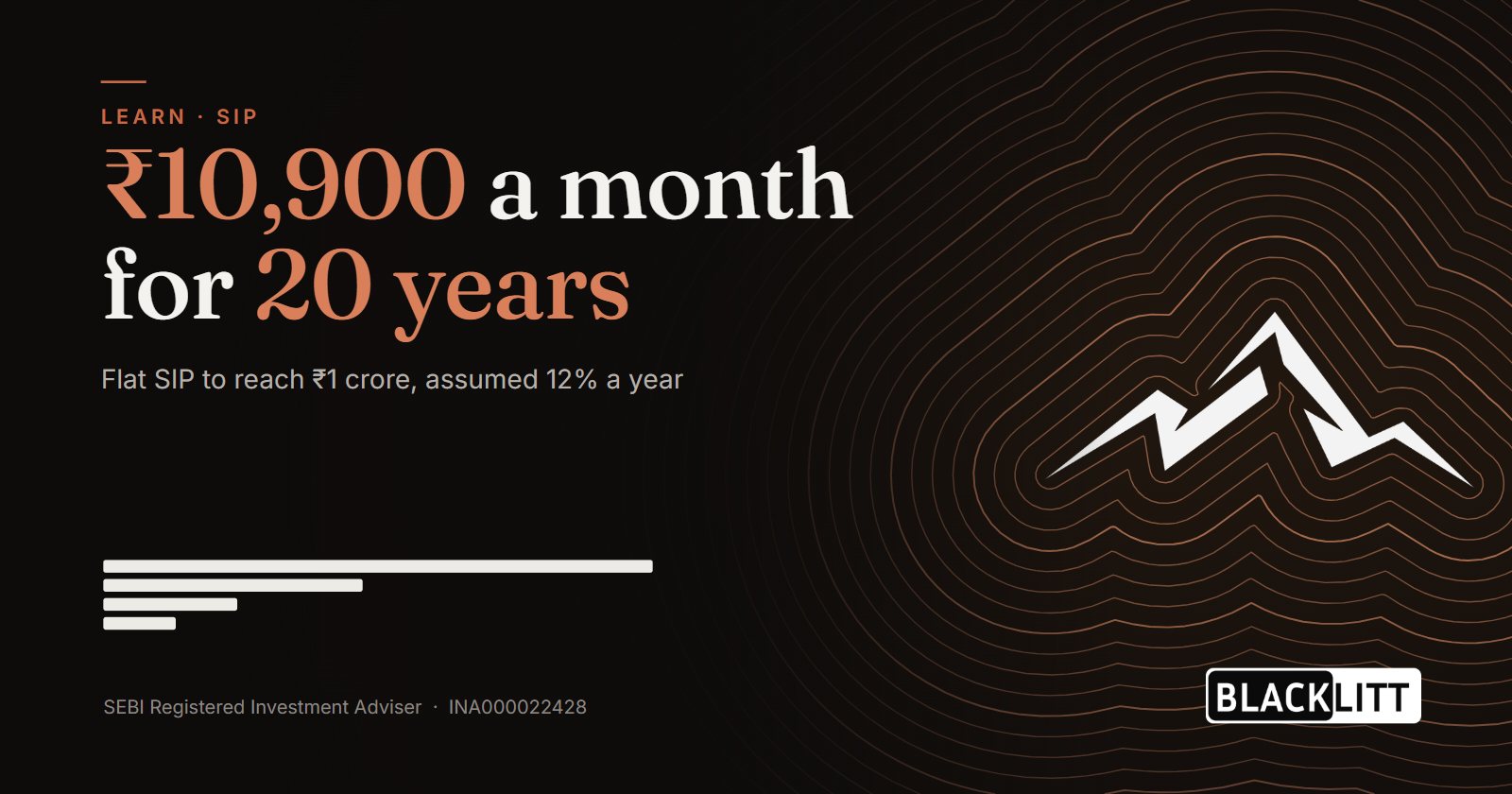
A SIP for ₹1 crore needs about ₹10,900 a month for 20 years at an assumed 12% a year. Over 15 years the figure is ₹21,100 a month, and over 10 years it is ₹44,700. A shorter timeline means a much larger monthly amount, so the deadline matters most.
If you are new to the idea, what a SIP is covers the basics. The figures below are illustrative and built on assumed returns.
Monthly SIP needed by time horizon
The table shows the monthly SIP that reaches ₹1 crore at two assumed return rates. Longer horizons need less each month and less in total, because compounding does more of the work.
| Years | Monthly SIP at assumed 10% (₹) | Monthly SIP at assumed 12% (₹) | Amount invested at 12% (₹ lakh) |
|---|---|---|---|
| 10 | 49,700 | 44,700 | 53.64 |
| 15 | 24,900 | 21,100 | 37.98 |
| 20 | 13,900 | 10,900 | 26.16 |
| 25 | 8,100 | 5,900 | 17.70 |
Illustrative figures at assumed rates. SIPs start at the beginning of each month, and amounts are rounded up to the next ₹100.
Illustrative figures at an assumed 12% a year.
Step-up SIPs start lower but invest more
A step-up SIP raises the monthly amount by a fixed percentage each year. It is easier to start with, but it puts in more money overall. How a SIP step-up works explains the mechanics. The tables below compare a 10% yearly step-up with a flat SIP at an assumed 12% a year.
| 15 years | Step-up SIP | Flat SIP |
|---|---|---|
| Monthly SIP to start (₹) | 12,100 | 21,100 |
| Total invested (₹ lakh) | 46.13 | 37.98 |
| 20 years | Step-up SIP | Flat SIP |
|---|---|---|
| Monthly SIP to start (₹) | 5,400 | 10,900 |
| Total invested (₹ lakh) | 37.11 | 26.16 |
Illustrative figures at an assumed 12% a year. The step-up raises the SIP by 10% once a year.
The step-up plan starts at ₹12,100 a month over 15 years instead of ₹21,100, which is easier to begin. It invests about ₹46.13 lakh in total, against ₹37.98 lakh for the flat plan. Over 20 years the gap is wider: ₹37.11 lakh against ₹26.16 lakh. A step-up suits someone whose income rises each year. It is a way to match the SIP to income, not a cheaper route to ₹1 crore.
Decide the goal in today's rupees
A ₹1 crore target is a number in the future, and prices rise in the meantime. The table shows what ₹1 crore is worth in today's money at an assumed 6% inflation.
| Years from now | ₹1 crore in today's money (₹ lakh) |
|---|---|
| 10 | 55.84 |
| 15 | 41.73 |
| 20 | 31.18 |
| 25 | 23.30 |
Illustrative figures at an assumed 6% inflation a year.
A ₹1 crore corpus 20 years from now buys about what ₹31.18 lakh buys today. Decide what the goal costs in today's rupees first, then work out the future amount it needs.
Steps to plan a ₹1 crore SIP
The steps below turn the tables into a plan. Each one is short, and you repeat the last step every year.
Step 1: Fix the deadline
Choose the year you need the money. The 10, 15, 20 and 25 year rows in the first table are the usual horizons. A shorter deadline needs a much larger monthly amount. At an assumed 12% a year, a 10 year plan needs about ₹44,700 a month. Be honest about whether you can carry that amount.
Step 2: Set the return assumption
The first table uses two assumed rates, 10% and 12% a year. Use the lower rate if you want a margin for error. The 12% line is a planning assumption, not a result. Equity returns vary from year to year, and the long-run average can differ from any single period.
Step 3: Work out the monthly amount
Read the monthly SIP from the first table for your horizon and rate. For 20 years at an assumed 12% a year, that is about ₹10,900 a month, putting about ₹26.16 lakh in over the period.
Step 4: Add a yearly step-up
If your income rises, raise the SIP each year. The 20 year step-up table starts at ₹5,400 a month, against ₹10,900 flat. Start with an amount you can keep paying in a lean year, not the amount you could pay in a good one.
Step 5: Review the plan every year
Once a year, check three things: the amount you are investing, progress against the goal, and how close the deadline is. As the date approaches, check whether the mix of funds still fits the time left.
Returns are not constant
The assumed 12% a year is an average over the period, not a fixed return. Equity funds can fall sharply in some years. A SIP that keeps running through a fall buys more units at lower prices, but it can still finish the period below the goal, and weak years close to the deadline matter most.
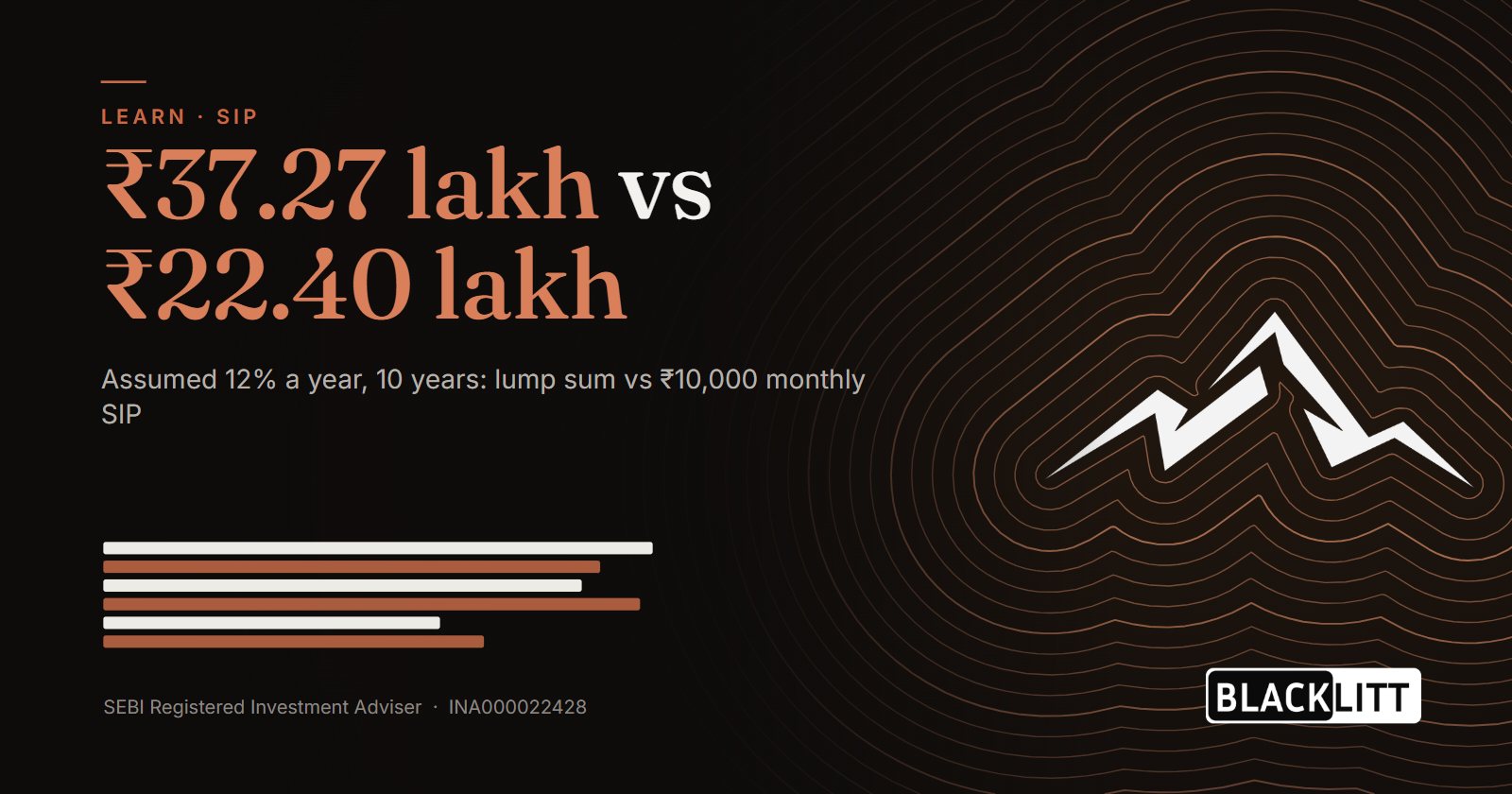
Whether a regular SIP or a single sum suits you is a separate choice, covered in SIP vs lump sum. Gains on equity funds are also taxed when you sell, and the mutual fund taxation guide explains how those gains are treated before you plan the final amount.
Frequently asked questions
Can a ₹10,000 monthly SIP reach ₹1 crore?
At an assumed 12% a year, a SIP of about ₹10,900 a month reaches ₹1 crore in 20 years, so ₹10,000 a month falls just short, at about ₹91.99 lakh. Reaching the goal with ₹10,000 would take a longer period or a higher return than the one assumed.
Is a step-up SIP better than a flat SIP for ₹1 crore?
A step-up SIP starts lower, so it can be easier to begin, but it invests more in total. For 20 years at an assumed 12% a year, the step-up starts at ₹5,400 a month and invests about ₹37.11 lakh, while a flat SIP needs ₹10,900 a month and invests about ₹26.16 lakh. Neither is better in every case; it depends on your income path.
Should the ₹1 crore target be in today's money or future rupees?
Decide the goal in today's money first, then convert it. At an assumed 6% inflation, ₹1 crore in 20 years is worth about ₹31.18 lakh in today's money. The future amount you need depends on what the goal costs now, so a clear figure in today's rupees gives you a more honest target.
What if equity markets fall close to my goal date?
A sharp fall close to the deadline can cut the final amount, because there is little time to recover. Many investors review the mix as the date approaches and move part of the money into less volatile funds. Check the plan every year, so a weak patch does not come as a surprise.
Disclaimer
This article reflects the author's views as of 30 October 2026. Past performance does not indicate future returns. Examples that use assumed returns are for illustration only and are not projections. Consider your own goals and risk profile before investing.
Investment in securities market are subject to market risks. Read all the related documents carefully before investing.
The securities quoted are for illustration only and are not recommendatory.
Registration granted by SEBI, membership of BASL and certification from NISM in no way guarantee performance of the intermediary or provide any assurance of returns to investors.
Blacklitt Technologies Private Limited · SEBI RIA INA000022428 · BSE enlistment 2491